

How Digging, Planting and Waiting Shape Childhood
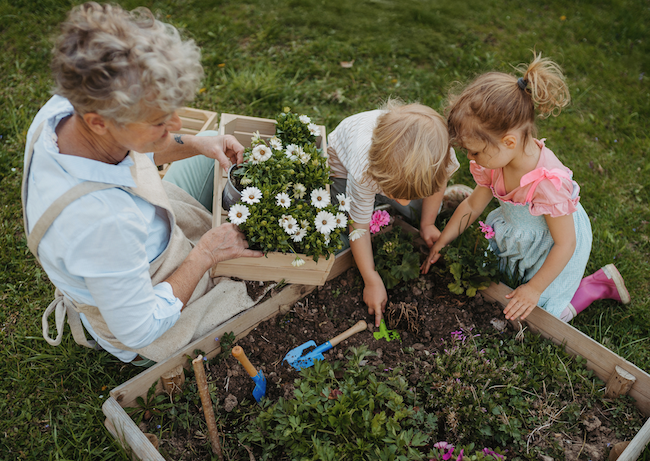
There is a type of education that happens in gardens that is unique, it's one that doesn't rely on worksheets, schedules or carefully planned lessons. It unfolds unnoticed, in muddy hands reaching into cool soil, in the careful placement of tiny seeds that seem impossibly small, and in the habit of returning day after day to see whether anything has changed. Children rarely think of these moments as learning because to them, they're simply part of an afternoon spent outside. However, some of childhood's most valuable lessons are found there, tucked between flower beds, watering cans and the patient rhythm of the seasons.
Gardening asks children to enter a world that doesn't move at the pace they're used to. So much of modern childhood happens instantly. A question is answered within seconds, a television programme begins with the press of a button, and games reward quick reactions and immediate results. A seed, however, refuses to hurry. It doesn't care about busy calendars or impatient curiosity. It grows according to its own timetable, asking only for sunlight, water and time; this is a concept that can feel unfamiliar at first.
Anyone who has planted seeds with a young child will recognise the daily excitement that follows. They water carefully, peer into the soil every morning and confidently announce that today will be the day something appears. Sometimes they're disappointed when the pot looks exactly as it did yesterday. Sometimes they ask whether the seeds are broken, or whether they planted them the wrong way around.
A week later, a tiny green shoot pushes through the soil, and suddenly all that waiting makes sense.
Children don't often remember being taught patience but they do remember experiences that required it. And gardening is right up there with these kind of experiences, it has a remarkable way of making waiting feel worthwhile because it isn't empty waiting. Every day brings small opportunities to notice something. The soil feels drier than it did yesterday. The sunflower has turned slightly towards the light. A ladybird has appeared where there wasn't one before. The lavender is beginning to flower, and bees seem to know before anyone else. Attention becomes part of the experience, and children begin looking more closely at the world around them without anyone asking them to.
It's easy to think gardening is mostly about growing plants, but children are usually growing something else alongside them. Confidence develops almost invisibly each time they remember to water a pot without being reminded, or when they recognise the first leaves on a seedling they planted weeks earlier. They begin to understand that their actions matter, not because someone tells them so, but because they can see the evidence with their own eyes. Living things respond to care and not every seed grows, of course. Sometimes heavy rain washes seedlings away. Sometimes snails discover the lettuce before anyone else does. Flowers wilt, leaves turn brown and carefully tended plants fail despite everyone's best efforts. These moments can feel disappointing, yet they're quietly valuable too. Nature doesn't promise perfection, and children seem surprisingly willing to accept that. They dig another hole, plant another seed and begin again, carrying far less frustration than many adults might expect.
There is a gentleness to gardening that makes room for mistakes. Nobody expects a child's first flower bed to look like the pages of a magazine, and perhaps that's part of its charm. The crooked rows, the handful of seeds scattered a little too generously, the muddy footprints leading back to the house, these are signs that children have been fully involved rather than carefully managed. They remind us that gardens are living places, not performances.
Some of the richest conversations happen there too, almost by accident and due to the nature of the experience, and the curiosity and inquisitiveness that comes with that. Questions about why worms live underground drift into discussions about healthy soil. Watching butterflies settle on flowers becomes an opportunity to wonder where they travel and what they need to survive. Children ask why leaves fall, why blossoms disappear, why some plants return every year while others don't. The garden answers many of those questions slowly, through observation rather than explanation, inviting curiosity instead of rushing towards certainty.
For families, gardening can also become one of the few activities that comfortably stretches across different ages. A toddler might delight in filling a watering can or digging enthusiastic holes with far more energy than precision. An older child may carefully read seed packets, measure spacing between plants or take responsibility for watering each evening. Adults often find themselves slowing down too, noticing the smell of tomato leaves, the warmth of the afternoon sun or the quiet satisfaction of pulling a weed without feeling the need to be anywhere else.
In a world that often encourages children to move quickly from one activity to the next, gardens offer a different rhythm. They reward consistency more than speed, observation more than achievement, and care more than perfection. Nothing blooms because someone hurried it along. The most beautiful corners of a garden are usually the result of many small moments of attention that barely seemed important at the time.
Perhaps that is why so many adults remember childhood gardens so vividly. They remember the towering sunflowers that somehow seemed taller than the house, strawberries eaten before they reached the kitchen, muddy boots left by the back door and the excitement of discovering something had grown overnight. What stays with them isn't simply the garden itself, but the feeling of belonging to a place that changed gently with the seasons and invited them to change alongside it.
Digging, planting and waiting may seem like simple activities, yet together they offer children something increasingly rare: the chance to experience growth as a process rather than an outcome. They learn that not everything meaningful happens quickly, that caring for something requires consistency, and that some of life's greatest rewards arrive quietly, almost unnoticed, after days or weeks of patient attention. Those lessons extend far beyond the garden fence, becoming part of the way children learn to approach the world long after the flowers have faded and the seasons have turned.