

Creating More White Space in Childhood
There is a moment that many parents recognise, although it often arrives quietly. It might happen while rushing from school pickup to an afternoon activity, or while looking ahead at a calendar that seems surprisingly full for a family with young children. Nothing on the schedule is necessarily wrong. In fact, many of the things filling those days are positive, enjoyable, and chosen with the best intentions. Yet there can be a lingering sense that family life has become something that is constantly being managed rather than fully experienced.
Modern childhood is rich with opportunities. Children can learn new skills, join clubs, play sports, take lessons, attend events, and participate in activities that previous generations may never have had access to. These experiences can be wonderful, but they also exist within a culture that increasingly equates fullness with value. Somewhere along the way, busyness has become a marker of a life well lived, and childhood has not escaped that shift. In light of this, what often gets overlooked is that children are not only developing through what they do but they are also developing through what they have time to absorb.
A child can spend an entire day moving between environments, expectations, social interactions, instructions, and sensory input. School alone asks a great deal of a developing nervous system; there are friendships to navigate, transitions to manage, noises to filter out, emotions to process, and countless decisions being made throughout the day. When additional commitments are layered on top without much room in between, children can find themselves carrying a level of stimulation that never quite settles.
This is one of the reasons that some children seem most dysregulated not during their busiest moments, but afterwards. The tears over something small, the sudden irritability, the difficulty settling into the evening, or the child who insists they are fine but seems unusually reactive can sometimes reflect a nervous system that has simply had too much to process without enough opportunity to recover.
Recovery is not something we tend to value highly in a culture that celebrates productivity, we often think about growth as something that happens through effort, practice, and engagement. Yet so much growth actually depends on the spaces in between. Children need time to make sense of experiences, revisit ideas in their minds, and return to a state of calm after periods of activity. Without those quieter moments, life can begin to feel like a series of events rather than something that is being fully lived. This is where the idea of white space becomes so important.
White space is not empty time waiting to be filled. It is time that belongs to the child rather than the schedule. Time without a particular objective attached to it. Time where imagination can emerge naturally, where boredom can be experienced without immediately being solved, and where the nervous system can soften after being asked to stay alert for much of the day.
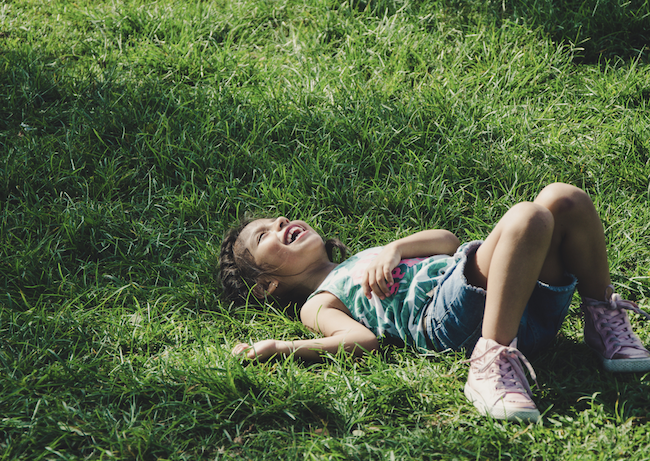
For adults, these moments can sometimes appear uneventful. A child lying in the grass watching clouds move across the sky does not look productive. Neither does a child slowly building with blocks for an hour, wandering around the garden collecting leaves, or sitting quietly drawing without any particular goal in mind. Yet these experiences often provide something that highly structured activities cannot. They allow children to follow their own pace.
There is a noticeable difference between a child whose time is largely directed by external demands and a child who regularly experiences stretches of self directed time. One is constantly responding to what comes next. The other has opportunities to listen to themselves. To notice what interests them. To become absorbed in something simply because they want to, not because it has been planned or organised for them.
That kind of space supports more than creativity. It supports emotional wellbeing. It allows children to reconnect with their own thoughts, notice how they are feeling, and gradually develop a sense of internal steadiness that can be difficult to access when life is always moving quickly. Nervous systems are not designed to remain activated indefinitely, and children are no exception.
Creating more white space in childhood does not necessarily require dramatic changes. It may simply involve protecting certain parts of the week from becoming overfilled. It might mean leaving a Saturday afternoon open rather than searching for something to do. It could look like resisting the urge to entertain every moment of boredom or recognising that not every interest needs to become a formal activity.
The goal is not to remove joy, opportunity, or enrichment from childhood. It is to create enough breathing room around those things that children can actually enjoy them. When there is space to rest, reflect, imagine, and simply exist without an agenda, childhood begins to regain some of the slowness that it naturally needs.
Perhaps one of the greatest gifts we can offer children is not another experience, but the freedom to fully inhabit the ones they are already having. In a world that is constantly encouraging more, there is something quietly powerful about making room for less. Not less connection, less wonder, or less opportunity, but less rushing, less pressure, and less of the feeling that every moment needs to be accounted for. Because often, it is within those unhurried spaces that children find what they need most.