

Strengthening Sibling Relationships
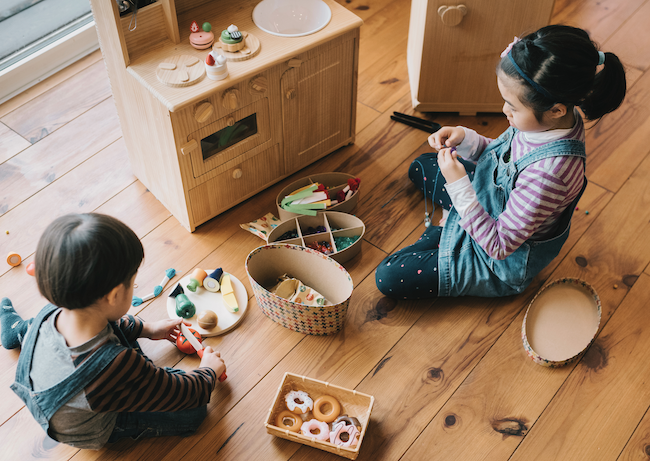
Sibling relationships are some of the longest and most complex connections children will experience in their lives. They are built in the everyday moments that unfold at home, in shared spaces, through laughter, conflict, closeness, and distance, often all within the same afternoon. While these relationships can sometimes feel challenging to navigate as a parent, they also hold a quiet potential for deep connection, learning, and belonging.
It can be easy to focus on the moments where things feel difficult, the arguments over small things, the competition for attention, or the frustration that seems to appear without warning. Yet beneath those moments, there is often a strong desire for connection that children are still learning how to express. Siblings are not only learning how to live alongside one another, they are learning how to relate, how to communicate, and how to repair when things feel hard.
Strengthening sibling relationships does not mean eliminating conflict or expecting constant harmony. In many ways, conflict is part of the process. It provides opportunities for children to practice negotiation, empathy, and understanding in a space where they feel safe enough to make mistakes. What matters most is not that conflict never happens, but how it is supported and guided when it does.
One of the most powerful ways to support sibling connection is by creating an environment where each child feels seen individually. When children feel secure in their relationship with a parent, they are often less likely to compete for attention or struggle for space within the family. Small moments of one on one time, even brief ones, can help build this sense of security and reduce underlying tension.
It can also help to step back slightly from constantly intervening. While it is important to ensure that everyone is safe, allowing children space to work through small disagreements can build important skills over time. When we move too quickly to solve every problem, children can begin to rely on external solutions rather than developing their own ways of navigating conflict. At the same time, gentle guidance plays an important role. Modelling calm communication, helping children put words to their feelings, and encouraging repair after conflict all contribute to stronger, more resilient relationships. These moments do not need to be formal or structured. Often, a quiet conversation, a reminder to listen, or an invitation to try again is enough.
Shared experiences can also strengthen sibling bonds in subtle ways. Playing together, working on a small project, or simply spending time in the same space without pressure allows connection to grow naturally. These moments do not need to be planned or elaborate. It is often the ordinary, repeated experiences that build familiarity and trust over time.
It is also important to recognise that every sibling relationship is unique. Some children are naturally close, while others need more time and space to find their rhythm together. There is no single way these relationships should look. Allowing them to develop without comparison or expectation creates room for authentic connection. For parents, this can mean holding a longer view. Sibling relationships are not defined by a single day or stage, but by the patterns that build over years. Moments of conflict, distance, and closeness all play a role in shaping the relationship.
Over time, with gentle support, children begin to develop a deeper understanding of one another. They learn how to share space, how to navigate differences, and how to return to connection after moments of difficulty. These are the skills that extend far beyond childhood and into the relationships they will carry throughout their lives. And within the everyday rhythm of family life, something steady begins to grow, not perfect harmony, but a relationship built on familiarity, resilience, and the quiet knowledge that they belong to one another.