

The Lunchbox Formula: How to Pack a Lunch Kids Actually Want to Eat by Kat from Nutritious Kids
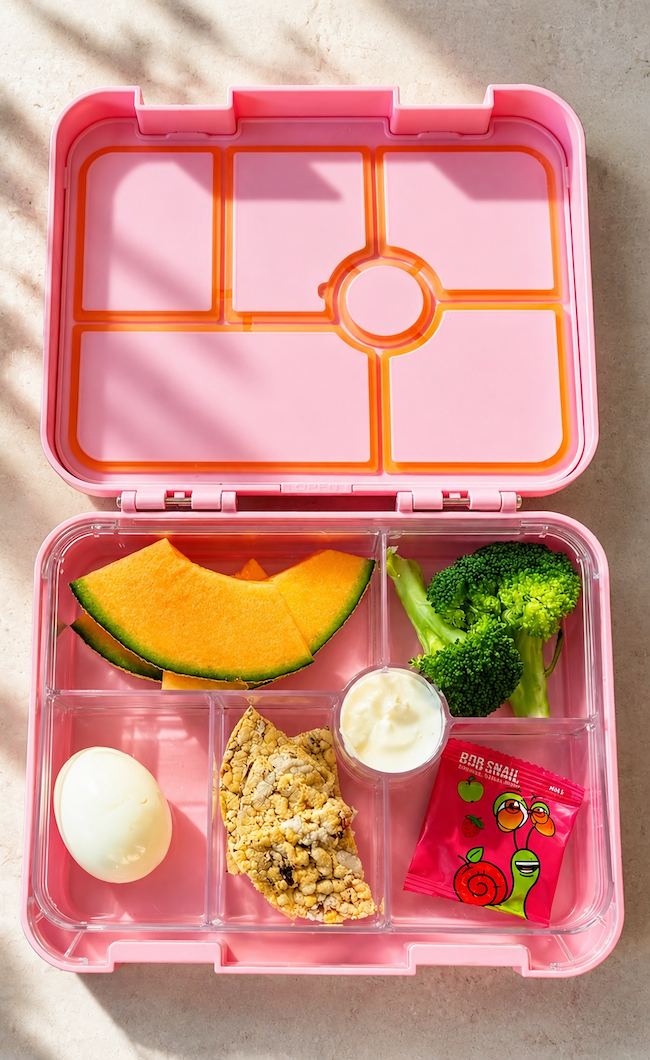
Packing a nutritious school lunch may sound simple — until you’re standing in the kitchen wondering what to include and whether it will actually come home eaten.
As a nutritionist, busy mum of three and creator of Nutritious Kids, I believe a lunchbox doesn’t need to be perfect, expensive or Pinterest-worthy.
It needs to be balanced, appealing and realistic for your family.
That’s why I use a simple lunchbox formula guided by the Australian Guide to Healthy Eating. Instead of starting from scratch each day, I think about the five core food groups and build from there.
The simple lunchbox formula: five food groups plus enjoyment
1. Start with a grain (cereal) food
Think wholegrain bread or wraps, crackers, rice, pasta, noodles, couscous or other grain- based foods.
These foods provide carbohydrate, an important source of energy for growing children and their busy school days.
Where possible, choose wholegrain or higher-fibre varieties such as wholegrain bread/wraps, wholemeal pasta and brown/black/red rice. Remember that the overall pattern of what children eat matters more than making every individual choice "perfect".
2. Add a protein food
Next, include a food from the lean meats, poultry, fish, eggs, tofu, legumes, nuts and seeds group, depending on your child’s preferences and your school’s allergy policy.
Protein foods provide important nutrients for children’s growth and development. They can also be added to familiar lunches in simple ways: chicken in a wrap, egg with rice cakes or hummus with vegetables.
3. Add colour with fruit and vegetables
This is one of my favourite parts of packing a lunchbox.
Berries, grapes, mandarins, melon, cucumber, carrot, capsicum, corn and cherry tomatoes are all easy options. There’s no need to include every colour in every lunchbox.
Instead, think about variety across the week.
Children don’t always accept a new food the first time. Repeated, pressure-free exposure can help them become more familiar and eventually, more accepting of different foods.
So if the cucumber comes home untouched today, don't automatically cross cucumber off the list forever. Keep exposure relaxed, pressure-free and offer it again another time or in a smaller amount.
Canned and frozen options can also be affordable, accessible and nutritious. When choosing canned foods, look for vegetables with no added salt where possible, and fruit packed in juice rather than syrup.
4. Include dairy or an alternative
Milk, yoghurt, cheese or suitable fortified plant-based alternatives provide important nutrients including calcium.
A yoghurt pouch, cheese with crackers or mini milks are simple lunchbox options.
5. Make room for enjoyment
A lunchbox doesn’t need to be made only from foods we usually label as “nutritious”. Food is also about enjoyment, culture, connection and learning.
A favourite snack, homemade muffin or something simply because your child enjoys it can absolutely have a place alongside everyday foods.
For me, this is also where creativity comes in.
Fun doesn't have to mean complicated
If you've seen Nutritious Kids, you'll know I love turning food into movie characters, animals and even rockets.
But here's my biggest message: You do not need to create food art to make food appealing.
Food art is something I enjoy creating, but it takes time. For another family, making lunch fun might mean cutting a sandwich into a different shape, adding a colourful food pick, arranging fruit into a rainbow, adding a personalised note or letting a child choose what goes into one compartment of their lunchbox.
Sometimes the smallest change is enough to make a familiar food interesting again. The aim isn't perfection. It's creating positive experiences around food.
6. Give children some choice
Children don’t need complete control over what’s packed, giving them age-appropriate choices can help them feel involved and more willing to try what’s in front of them.
Try:
"Strawberries or grapes?"
"Sandwich or wrap?"
"Carrot or cucumber?"
You're still deciding what foods are available, while your child has some ownership over what they eat.
It's a simple strategy that can help children become more familiar and confident with different foods.
7. Don't panic when food comes home
Opening a lunchbox at 3pm and finding half the food still inside can be frustrating. But an uneaten lunch doesn't necessarily mean your child dislikes the food.
School lunch breaks can be busy and distracting. Children may want to get outside and play, they may not be particularly hungry that day, or the food may simply take too long to eat.
Instead of viewing leftovers as failure, use them as information. Look for simple patterns: Is the portion too large? Is something difficult to open? Does your child consistently eat one food but leave another? Were there tummies full?
These patterns can help you pack a lunch that better suits your individual child.
8. Think across the week, not one lunchbox
The most important thing to remember is that nutrition isn't determined by one meal.
Children's eating patterns are built across days and weeks.
Some mornings you'll pack a beautifully balanced lunchbox. Other mornings you'll be working with whatever is left in the fridge — and that's real life.
Rather than aiming for the "perfect" lunchbox, keep coming back to the basics:
Grain + protein + fruit + vegetables + dairy or an alternative + enjoyment.
Offer variety. Keep introducing nutrient dense foods without pressure. Let your child have some input. And make it as simple or creative as works for your family.
Because ultimately, the best lunchbox isn’t the one that looks perfect on Instagram — it’s the one your child enjoys and is most likely to eat.
Use the Australian Guide to Healthy Eating to help balance a lunchbox: https://www.eatforhealth.gov.au/guidelines/australian-guide-healthy-eating
Still stuck for lunchbox ideas? Try Cancer Council’s Healthy Made Tasty Lunchbox Builder to help make lunchbox planning easier: https://healthymadetasty.com.au/builder/
Kat has university qualifications in Nutrition and Health Promotion, along with more than 12 years’ experience in community and public health. As a mum of three and creator of Nutritious Kids, she combines evidence-based nutrition with practical, creative ideas to make healthy eating fun and achievable for families.
Follow Kat @nutritious.kids on Instagram or Tik Tok