

Children borrow confidence from their parents.Parents borrow confidence from people they trust by Sarah Duncanson
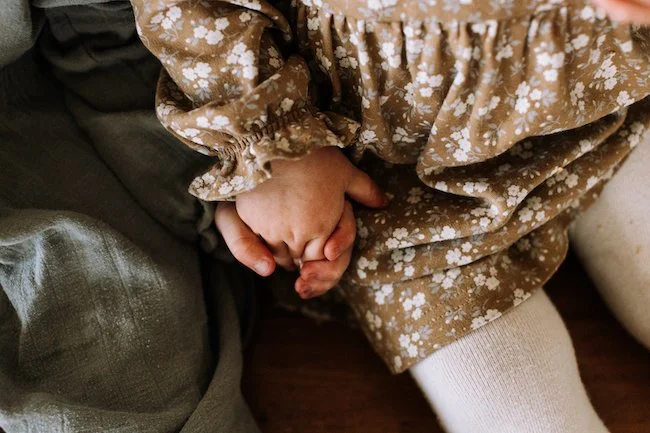
A few weeks ago, we packed the bikes into the car and headed for one of our favourite mountain bike tracks. Our boys, aged eleven, nine and six, have fallen in love with the ruggedness of the bush. They love weaving between gum trees, bouncing over rocks and discovering just how much those little legs are capable of. They're at that beautiful age where every ride feels like an adventure waiting to happen. Our youngest, Elsie, is four. She desperately wanted to join in. She arrived in all the confidence that only a four-year-old can have, proudly sitting on her little Bluey bike with its training wheels. Helmet on. Gloves on. Water bottle filled. She was completely convinced she was ready to conquer the mountain.
Then, within seconds, everything changed.
Her older brother came around the first bend, hit a small jump and gently toppled into the dirt. It wasn't dramatic. He stood up, laughed, brushed himself off and climbed straight back on his bike. But Elsie had seen enough. She quietly climbed off her own bike, looked up at me and said,
"I don't think I can do this anymore."
In that moment, every instinct in me wanted to agree with her. I wanted to scoop her up into the biggest cuddle, tell her she was absolutely right to be careful and carry her back to the picnic rug where there were no rocks, no scraped knees and no chance of getting hurt.
Because that's what worry does. It whispers that love looks like protection.
That the best parents are the ones who remove every obstacle before their children have to face it. But standing there in the bush, I realised something. If I rescued her from this moment, I might also rescue her from discovering what she was capable of. So instead of carrying her away, I knelt beside her. I reminded her that she was wearing all of her protective gear. I reminded her that she already knew how to use her brakes. Most importantly, I reminded her that I wasn't sending her off on her own. I would be riding right beside her. Then I asked one simple question.
"Would you like to see if you can do it?"
She looked back at the jump. Then at me.
"Okay."
She climbed back onto her little Bluey bike, took a deep breath and pedalled towards the very jump that had frightened her only moments before. To the adults watching, it was barely twenty centimetres high. To Elsie, it may as well have been Mount Everest. She rolled straight over it. She looked back at me with the biggest smile on her face.
And I've thought about that moment a lot since. Not because she conquered a mountain bike track. Because she discovered something about herself. As I drove home that afternoon, another thought kept returning to me.
Children borrow confidence before they build their own.
Before they believe they can do something difficult, they borrow our belief first. They look at our faces and silently ask,
"Am I safe?"
"Can I do this?"
"Do you think I'm capable?"
Long before children trust themselves, they trust us.
If we panic, they panic.
If we believe they can do hard things, they begin to believe it too.
I've seen this hundreds of times. I've seen it in hospital rooms before surgery. I've seen it at the dentist, before blood tests, on the first day of school and on playgrounds all over Australia. Children are constantly borrowing confidence from the adults who love them. But as I continued driving home, I realised something else.
Perhaps parents borrow confidence too.
Every week I meet parents who don't really want more information. They want reassurance. They want someone to tell them,
"You're noticing the right things."
"Your instincts matter."
"You've got this."
After almost twenty years working in paediatric intensive care, I don't think the biggest problem facing parents is a lack of information.
If anything, we have the opposite problem.
Never before have parents had access to so much health information. We can search symptoms in seconds, watch videos from experts around the world and scroll endlessly through parenting advice, often before breakfast.
Yet many parents tell me they feel less confident than ever. Information, on its own, doesn't create confidence. Understanding does.
One of the most common questions I hear isn't, "How do I perform CPR?"
It isn't, "How do I treat a burn?"
It isn't even, "What temperature means my child needs hospital?"
It's much simpler than that.
"How do I know if my child is really okay?"
That question sits underneath almost every conversation I have with parents. Because what they're really asking is,
"Can I trust myself?"
I think the answer is yes. Parents notice far more than they realise. Some of the most powerful words I've heard throughout my career haven't come from blood tests or monitors.
They've come from a parent quietly saying,
"They're just not themselves."
I've lost count of the number of times those words have been the first sign that something important was changing. Not because parents are healthcare professionals. Because they know their child. They notice when a smile doesn't quite reach the eyes. When the usually chatty toddler becomes quiet. When their adventurous child simply wants to be carried. Those observations matter. As healthcare professionals, we don't dismiss them. We listen. That's what good health literacy really is. It isn't turning parents into nurses. It isn't expecting them to diagnose illnesses. It's helping them understand what matters most. It's giving them the confidence to observe their child, recognise when something has changed and know when it's time to seek help. It's replacing helplessness with understanding.
Because there is a profound difference between worry and helplessness.
Worry says,
"This matters."
Helplessness says,
"I don't know what to do."
The goal isn't to stop worrying. I don't think we ever will. The day we become parents, a small part of us will always worry. The goal is to stop feeling helpless. That's why I teach first aid. Not because I want parents to become paramedics in their own homes. Not because I want families living in constant anticipation of emergencies. I teach first aid because confidence creates freedom.
When you know what to look for, you're less likely to panic over every fever.
When you understand choking, you can enjoy family picnics without fear sitting at the table beside you.
When you know how to respond if something goes wrong, you're more likely to say "yes" when your child wants to climb the tree, ride the bike or explore the bush.
Knowledge doesn't remove risk. It removes helplessness. And they're two very different things.
Working in paediatric intensive care has never made me want children to experience less childhood. If anything, it has made me fiercely protective of it. I've looked after children who would have given anything to kick a football, climb a tree or ride their bike with their siblings again. I've watched children in hospital find joy in glitter, bubbles, books and sunlight dancing across the ceiling. They've reminded me that childhood is wonderfully ordinary.
It's muddy knees.
Cubby houses.
Bush walks.
Blueberry muffins.
Stories before bed.
Bike rides that feel enormous when you're four years old.
Those ordinary moments are the ones we spend our lives remembering. I don't want fear to steal them. I don't want parents living so cautiously that they forget to delight in the beautiful, adventurous, wonderfully messy years unfolding right in front of them. I want them to feel prepared. Not because preparation guarantees nothing will ever go wrong.
But because preparation gives us permission to be present.
So perhaps that's what confidence really is. It's not knowing everything. It's not eliminating every risk. It's not pretending we aren't afraid. It's quietly standing beside the child we love, believing in them before they believe in themselves.
And then, when our own confidence wavers, borrowing a little from the people who have walked the road before us, until we discover that perhaps we were more capable than we realised all along. Because before children build confidence of their own, they borrow ours. And perhaps one of the greatest privileges of parenthood is discovering that sometimes, we get to borrow a little confidence too.
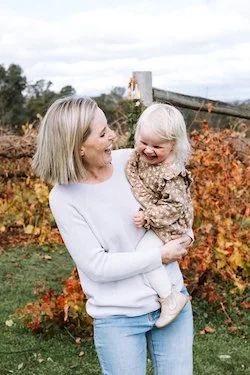
Sarah Duncanson is a Paediatric Intensive Care Nurse at The Royal Children's Hospital Melbourne, where she has spent the past 18 years caring for some of Australia's sickest and most seriously injured children. She now divides her time between the hospital and PAEDS Education, the organisation she founded to help parents, carers, educators and healthcare professionals care for children with greater confidence through practical, evidence-based education.
Passionate about improving health literacy and empowering the adults who surround children every day, Sarah believes that confident adults create safer, happier childhoods. Whether she's teaching first aid, supporting children with complex medical needs or advocating for better paediatric education, her mission remains the same: to bring the knowledge of children's hospitals into homes, schools and communities.
Away from work, Sarah's greatest joy is life on a small farm in regional Victoria with her husband and their four adventurous children, where muddy boots, mountain bikes and ordinary family moments continually remind her why protecting the wonder of childhood matters so much.
@paeds_education
https://www.paedseducation.com.au/