

10 Ways to Make Room for Wonder in an Ordinary Week
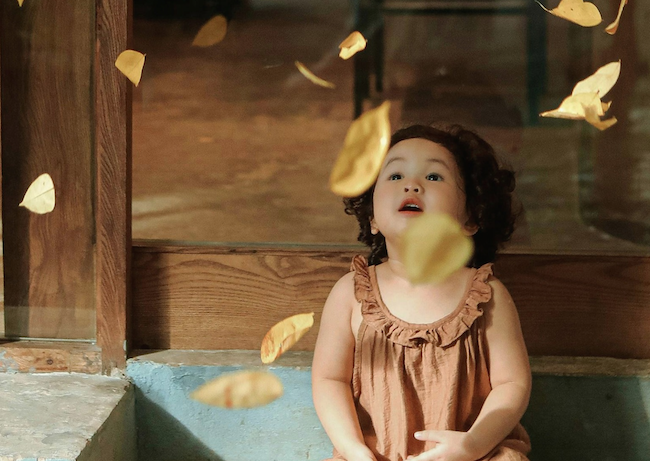
A child can find something fascinating in the middle of an otherwise forgettable Tuesday. A snail crossing the footpath can bring the morning to a halt. A strange cloud can become the subject of an extended discussion. A puddle that has been sitting in the same spot for three days suddenly becomes an excellent place to investigate what happens when a stick is dropped into it.
Adults tend to know where they are going. Children are often more interested in what they happen to find along the way, and that difference can make ordinary family life feel surprisingly full when there is enough room to follow it. Wonder doesn't require a special outing or an elaborate activity. It often starts with noticing something that would be very easy to walk past.
1. Take the long way home
Every now and then, let the journey become part of the afternoon. Walk down a different street, take the path through the park or make a small detour simply because something caught your child's attention.
A longer route gives children the chance to notice things they would usually pass without thinking. They might find an interesting tree, watch someone walking a particularly enthusiastic dog or discover a tiny garden tucked behind a fence. You may arrive home ten minutes later, but the walk has become an experience rather than simply a way of getting somewhere.
2. Look closely at something ordinary
Pick something that lives in your everyday surroundings and really look at it. A leaf, a feather, a rock, a flower, an old brick wall or even a piece of fruit can become surprisingly interesting when a child has time to examine it properly.
What does the leaf feel like? Why are the veins arranged that way? How many colours can you see? What might have happened to that little hole in the middle?
Children don't always need an explanation. Sometimes giving them the time to observe, guess and ask questions is enough to turn something familiar into something worth investigating.
3. Go outside after dark
The backyard can feel completely different once the sun has gone down. Take a torch outside, look for moths around the lights, listen for night-time sounds or lie on a blanket and look at the sky.
For younger children, even walking around the garden in pyjamas can feel like an adventure. Older children may become interested in stars, planets, nocturnal animals or the way familiar places change when you can't see everything clearly. You don't need to know anything about astronomy to make an evening of it, you can wonder together.
4. Let them follow a question
Children's questions often disappear because the day moves on before anyone has time to follow them. If your child suddenly wants to know where worms go when it rains, how honey gets into a jar or why some trees lose their leaves, let the question have a little life of its own.
Look it up together. Find a book. Go outside and investigate. Make a prediction and see what happens. The answer can be interesting, but the process of following a question may be even more valuable. Children learn that curiosity doesn't have to end with someone giving them a fact.
5. Give an ordinary walk a mission
A walk around the neighbourhood can become a completely different experience when children have something to look for. You could search for five different kinds of leaves, find the smallest flower, spot birds, look for interesting textures or see how many different shades of green you can find.
The mission doesn't need to be competitive or complicated. In fact, it can be more fun when children are allowed to change the rules halfway through because they have discovered something better.
6. Cook something you've never made before
Choose a recipe together and allow the process to become part experiment, part meal. Perhaps you've never made bread, homemade pasta, dumplings or a particular kind of cake before.
Children can measure ingredients, watch dough change shape, smell spices, predict what will happen in the oven and taste something they helped create. Cooking naturally brings up all sorts of questions about heat, texture, ingredients and where food comes from, and nobody needs to turn the kitchen into a classroom for those conversations to happen.
7. Watch something change
Wonder often comes from seeing a process unfold over time. Plant a seed in a pot and let your child check it each morning. Put an ice cube outside and see how long it takes to disappear. Grow a jar of sprouts on the windowsill or collect fallen leaves and watch what happens as they dry.
The waiting is part of the experience. Children get to notice that some things happen quickly while others take days or weeks, and they can become surprisingly invested in checking on something that seemed completely unremarkable when it began.
8. Follow an interesting sound
If you hear something unusual while you're outside, stop and work out where it is coming from. A bird call, buzzing insect, construction noise, rustling leaves or music drifting from somewhere nearby can become an invitation to investigate.
Children are naturally curious about sounds they can't immediately identify. Following one can turn a walk to the shops into a small mystery, especially when the source turns out to be something completely unexpected.
9. Give them something unfamiliar to explore
A visit to a library shelf you've never explored, an unfamiliar section of the garden, a new playground or a different part of your local park can provide enough novelty to wake up a child's attention.
You can also bring something interesting home. A magnifying glass, a collection of shells, an old map, a packet of seeds or a second-hand book about insects can sit around for days and invite children to pick it up whenever curiosity strikes. The object itself doesn't necessarily need to be anything impressive, sometimes a strange-looking seed or an old key can generate more questions than an expensive toy.
10. Leave some time with nowhere to go
One of the easiest ways to make room for wonder is to leave part of the week unscheduled. When every afternoon has a destination, an activity or a task attached to it, children have fewer opportunities to notice what happens when nobody tells them what to do next.
An empty afternoon might begin with Lego and end with a cardboard city. Someone might spend an hour drawing maps, digging in the garden or trying to build a shelter from blankets. A child who has enough time can move from one idea to another without needing to produce anything useful at the end of it.
Wonder has a funny way of appearing when nobody is looking for it. It can turn up on the walk to school, in the garden after rain, while making toast or halfway through a conversation about why the neighbour's cat keeps sitting on the same fence. Family life doesn't need to become a series of carefully designed experiences to make room for those moments. Sometimes it simply needs a little more time around the edges, enough for everyone to notice what is already happening.