

Why Bottle Refusal Isn't What You Think It Is by Shannon Usher
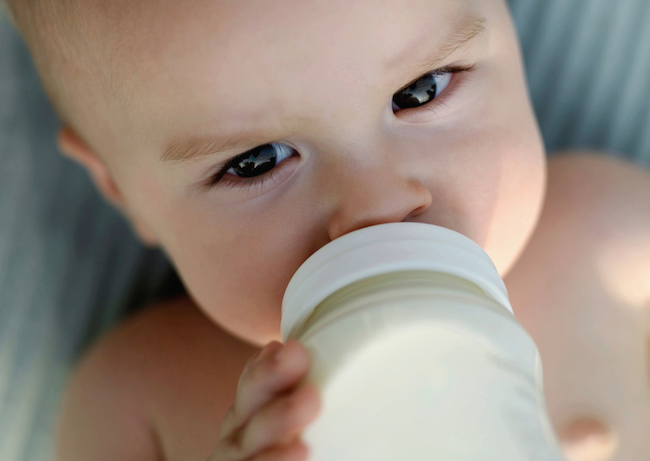
Spend any time on the internet, social media or Reddit and you'll find thousands of moms talking about bottle refusal. Many will tell you they had no idea this was even a thing, until it happened to them. All while research suggests 61% of breastfeeding moms will experience it and 23% will never find a solution. (Maxwell, 2020)
Most moms arrive at bottle refusal believing one of two things. Either something is wrong with their baby; their mouth, their personality, their attachment to the breast. Or something is wrong with them; they waited too long, they did something wrong, they haven’t found the right bottle, they're somehow the reason this is happening.
Neither is true. And by the end of this article, you'll understand exactly why.
The most common explanations?
You need to find the right bottle.
It's your baby's personality.
Breastfeeding is just superior and your baby knows it.
Something is wrong with your baby's mouth.
Some babies just won't bottle feed.
Here's the thing, every single one of these is a guess. A well intentioned, widely circulated, completely unsubstantiated guess.
And once you understand how infant feeding actually develops, you'll realize not only do none of these explanations make sense, but the weeks of struggle most families go through is almost entirely unnecessary.
So why do some breastfed babies suddenly scream when a bottle shows up, even if they've taken one happily for weeks? Why do they chew instead of suck? Why do they spit the milk out like you're trying to poison them with their favorite food?
The simple answer: your baby thinks you're trying to feed them with a shovel.
Let me explain.
Your baby was born knowing how to eat, sort of.
Nearly every baby born, in every country, in every city across the entire world arrives with a set of primitive reflexes. They’re biological, built in survival tools designed to help a baby transition from life inside the womb to life on the outside.
One of the most important jobs those reflexes have? Teaching a baby to eat.
Because eating after birth is no small task. A baby must suck, swallow and breathe in a coordinated rhythm, over and over, for an entire feeding. And they must do this well enough to consume enough milk to stay hydrated and grow. Without any prior experience.
That's where primitive reflexes come in. When triggered they activate a baby's ability to root, suck and swallow automatically, the way your leg flies forward when a doctor hits your knee with a rubber mallet. The reflex does the work. The baby doesn't have to figure anything out yet.
And this is exactly why breastfeeding and early bottle feeding can feel almost magical. The reflex is doing most of the heavy lifting.
So what goes wrong?
Here's where it gets interesting.
Those reflexes aren't meant to last forever. After weeks of practice and repetition the brain essentially says, “Got it, we know how to eat now”, and the reflexes begin to fade. This is completely normal.
But here's the problem.
If a family hasn't consistently incorporated bottles during those early weeks, or if a baby has only taken a few, the baby's brain never fully learned that a bottle is a feeding tool. It learned what breastfeeding is. It never learned what a bottle is.
So when the reflexes start fading and mom offers a bottle, the baby has no automatic response to draw on. The reflex that would have guided them through the feeding is going away. And without it, the bottle is, from your baby's perspective, completely unrecognizable as food. It might as well be a shovel.
A baby isn't refusing. They genuinely don't know what you're trying to do.
This is why they chew instead of suck. Why they thrust the bottle out. Why they cry before it's even touched their lips. Why a baby who took a bottle happily for weeks suddenly acts like they've never seen one before because after an exclusively breastfed vacation their brain moved on and the reflexes got a little quieter.
None of this has anything to do with the bottle brand, the nipple flow, the milk temperature, whether mom is in the house or whether your baby has a "difficult personality."
It has everything to do with timing and reflexes.
What you can actually do about it.
Put your credit card down first. Changing the bottle helps approximately 15% of the time, which means 85% of the time, it's not the bottle at all. (Maxwell, 2020) Same goes for changing the milk temperature, oral exercises and bodywork. These aren't bad suggestions, they're just addressing the wrong problem.
The most important thing you can do right now is find out whether your baby's sucking reflex is still present.
Here's how:
Wash your hands. Flip your finger so the pad side is facing up. Gently place it on the roof of your baby's mouth and wait.
Does your baby immediately start sucking? That's the sucking reflex, and it's exactly what you need.
If your baby chews or moves their tongue around don't panic. If they're over 8 weeks old the reflex will be fading and can take a moment to show up. Give it 30-60 seconds. You're only looking for 1-2 sucks. And it doesn't matter if your baby won't suck on a pacifier or bottle, you only need to feel it on your finger.
Not sure what you're looking for? Here is free video that shows you exactly how to check for the sucking reflex and what it looks like.
If you feel even 1-2 sucks your baby still has the reflex designed to teach them what bottle feeding is. That reflex, when used correctly, is what bridges the gap between the shovel and the bottle. Between struggle and easy feedings. Between where you are right now and where you want to be.
If your baby only chews or is over 6 months the sucking reflex has likely fully integrated which means feeding is now completely voluntary. This doesn't mean bottles are impossible. It just means the approach looks slightly different and relies more on traditional learning than reflex activation.
The reframe that changes everything.
Bottle refusal assumes something is broken, the baby, the bottle, the mom, the milk. Something that must be fixed before feeding can happen. But when you understand how infant feeding actually works you realize nothing is broken at all.
Your baby can breastfeed which means they already have every physical capability needed to bottle feed. You are the perfect person to teach them. Your milk is exactly right. The only thing missing is the bridge between what they know and what they haven't learned yet.
Bottle refusal should probably be renamed ‘primitive reflex integration with feeding’, but that's a mouthful and nobody is going to Google it at 2am.
What matters is this: you now know what's actually happening. You know it isn't the bottle. You know it isn't your milk. You know it isn't your baby's personality or a problem with their mouth. You know it's not bottle refusal at all.
And you know exactly where to start.
Shannon Usher, MSOT, OTR/L, CNT, NTMTC is a neonatal occupational therapist with 15 years of experience across the NICU, PICU and high risk feeding clinics. She is an international speaker and the creator of Bottles on Purpose, a patent pending system helping breastfeeding families in 24 countries resolve bottle refusal. As a mom of three boys she knows exactly how stressful feeding struggles can feel and built Bottles on Purpose to give families a clear and compassionate path to feeding freedom, whatever that looks like for each family.
Website: www.bottlesonpurpose.com
IG Handle: @bottlesonpurpose